 Even the word PalestineNinety-five years of marks around the name · 1919 to 2014
1919 to 2014
Even the word Palestine
Quotation marks around a word are a newspaper saying: this is somebody else’s term, and we are not adopting it. Eleven headlines in this archive put those marks around the name of the country, the name of the people, or the word for their statehood. The first is from 1919. The last is from 2014.
They are not quoting a source. In most of these the marks sit on a noun with nothing attributed to anybody, which is the form that does the work: the paper prints the word and declines it in the same gesture.
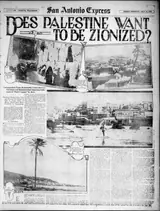
… Opposing Settlement of “Their Country”
The earliest. Christians and Muslims in Palestine are found to be in remarkable union against Zionist settlement, and the marks land on the two words that say whose country it is. Not on settlement. On their.
 CP-1919-010
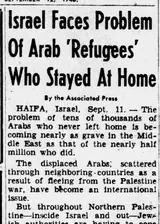
“Israel Faces Problem Of Arab ‘Refugees’ Who Stayed At Home”
Four months after the state was declared. The marks are on refugees, and the reason is in the rest of the headline: these people never left. A word is being refused because the people it names did not move, which is a definition problem the paper resolves with punctuation.
 CP-1948-086
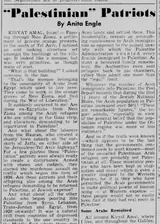
“Palestinian” Patriots
Two words, and the marks are on the adjective. Nine years before the occupation and six before the PLO, a headline treats the word for the people as a claim rather than a description.
 CP-1958-001
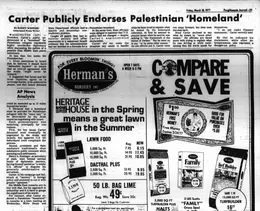
“Carter Publicly Endorses Palestinian ‘Homeland’”
A president says the word for the first time, and the paper reporting it puts the word in marks in the same headline. The endorsement is public and unqualified; the noun is not.
 CP-1977-019
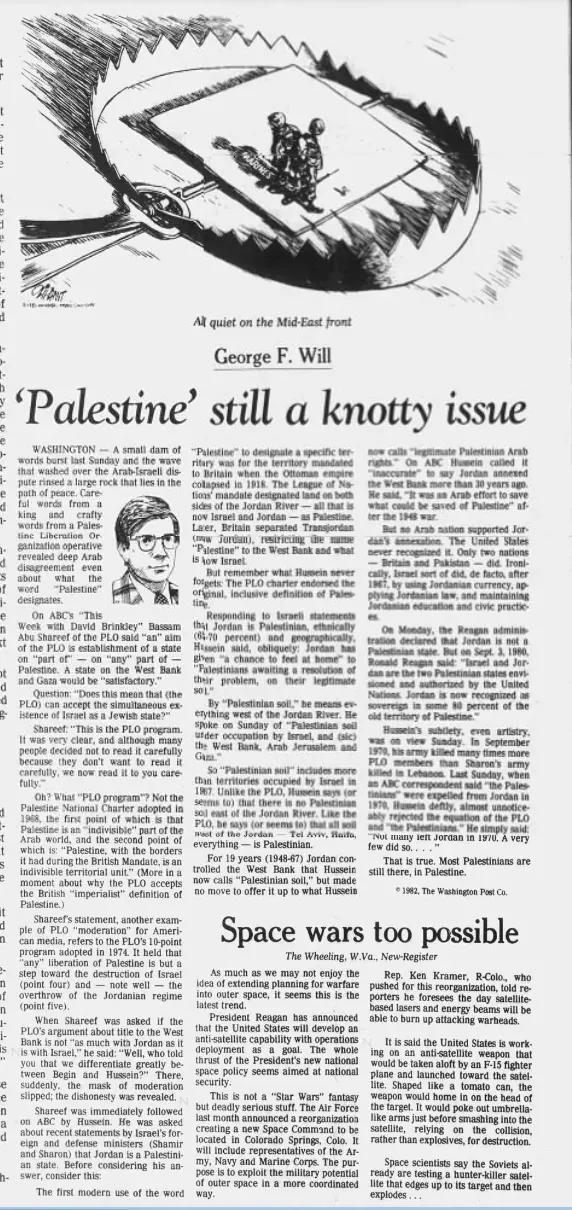
“‘Palestine’ still a knotty issue”
And a paper the same day says the quiet part in its own headline: Even the word ‘Palestine’ a matter of debate. Two printings of one syndicated column, and between them they name the thing this section is about. The word is the issue. Not the borders, not the status. The word.
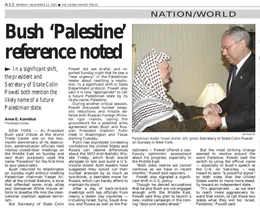
CP-1982-007“Bush ‘Palestine’ reference noted”
The same Associated Press story ran that day in Grand Rapids and in Bridgeport, Connecticut, where the headline was Bush uses ‘Palestine’ deliberately. Both papers put the marks on. The story underneath is that a president used the name on purpose and the State Department called it appropriate; the headline treats the word as still on approval.
 CP-2001-022
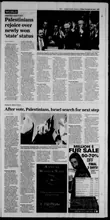
“Palestinians rejoice over newly won ‘state’ status”
138 of 193 votes at the United Nations the night before. The paper accepts the vote, the margin and the rejoicing. The single word it will not print plain is the one the vote was about.
 CP-2012-005
“Obama: ‘Palestine’ named”
The last one here, ninety-five years after San Antonio. Three words and a colon, and the marks are still on.
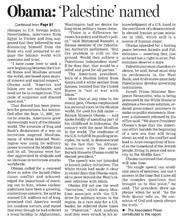 CP-2014-029
Three more sit in the same run: the second 1982 printing (CP-1982-005), and the U.S. protest at a ‘State of Palestine’ placard at the United Nations in January 2013 (CP-2013-011).
This archive tracks the same punctuation elsewhere and finds the same thing. Nakba arrives in a headline inside quotation marks in 1983 and is still inside them in 2021 →
What the two sets have in common is that the marks never come off by argument. In the one case in this collection where a headline prints Nakba plain, it belongs to a guest column by two Jewish writers. Nobody took the marks off the word Palestine either. The last headline here still has them.
The next time a paper puts a word in quotation marks, it is worth checking whether anybody is being quoted. If nobody is, the marks are the paper talking, and what they are saying is that the word has not been agreed to yet.