The note above the story
36 clippings, 1977 to 2002, in which an American newspaper told its readers that an Israeli military censor had seen the story first.
An Israeli sergeant whose first name is Gil said the van ran a red light, approached at 40 mph and struck the two military police officers, a man and a woman, who had been posted at the corner to keep order among the hitchhikers.
That sentence ran in the Huntsville Times on 11 October 1991. The reporter had the man’s surname. The sergeant gave it to him. A censor ordered it out, and the sentence was rebuilt around the hole so the man could still speak.
The deletion isn’t the unusual part. The paper said so, above the dateline, before a single word of the story:

Somebody in Alabama decided the reader should know.
They never agreed on how to say it
Reporters filed, the censor read, and what came out went to American newspapers. That much is documented. What happened next isn’t. In Alabama and North Dakota and New Jersey, an editor held a censored story and decided whether to mention it. Across 36 clippings they reached for 27 different sentences.
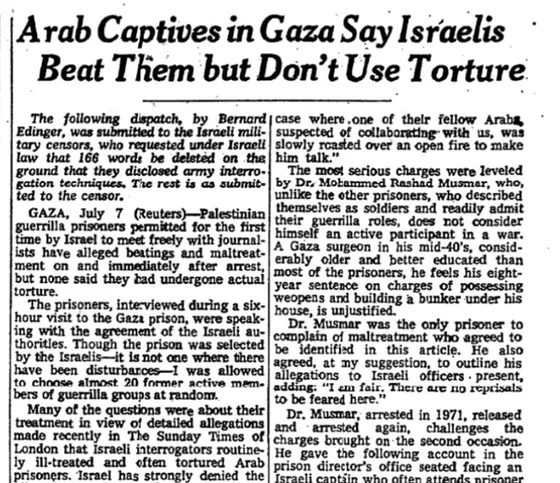
The following dispatch, by Bernard Edinger, was submitted to the Israeli military censors, who requested under Israeli law that 166 words be deleted on the ground that they disclosed army interrogation techniques.
The New York Times · 8 July 1977 · CP-1977-025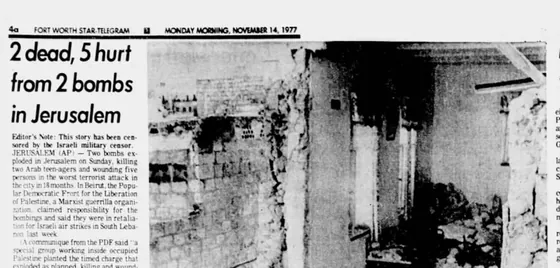
This story has been censored by the Israeli military censor.
Fort Worth Star-Telegram · 14 November 1977 · CP-1977-036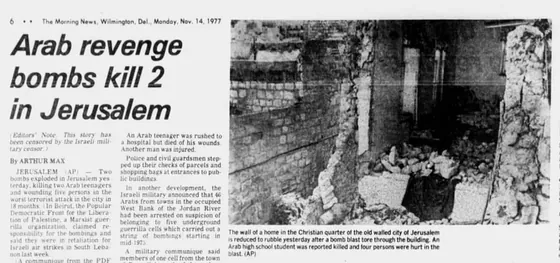
This story has been censored by the Israeli military censor.)
The Morning News · 14 November 1977 · CP-1977-034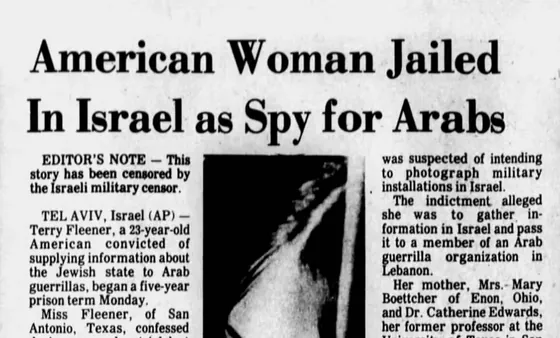
This story has been censored by the Israeli military censor.
a paper whose masthead is cut off · 10 January 1978 · CP-1978-021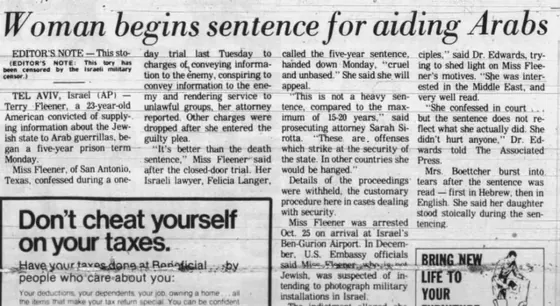
This sto- (EDITOR’S NOTE: This tory has been censored by the Israeli military censor.)
a paper whose masthead is cut off · 10 January 1978 · CP-1978-024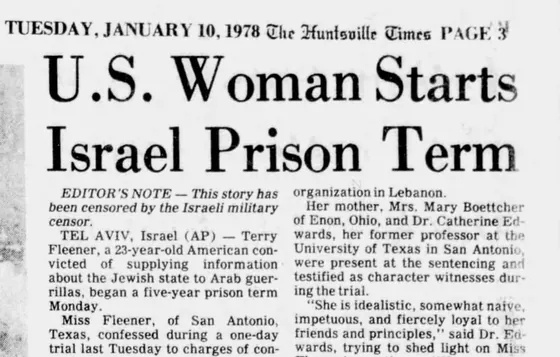
This story has been censored by the Israeli military censor.
Huntsville Times · 10 January 1978 · CP-1978-026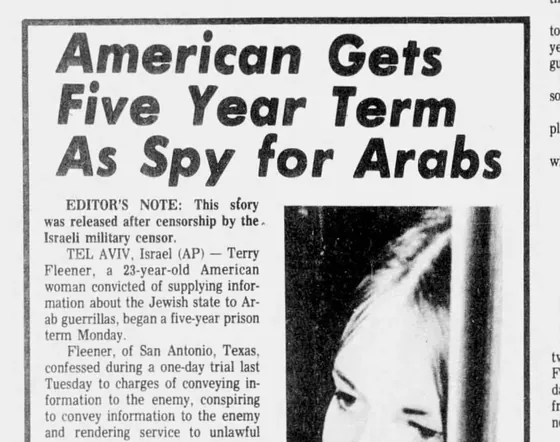
This story was released after censorship by the Israeli military censor.
The Missoulian · 10 January 1978 · CP-1978-028
The Israeli military censor ordered the rephrasing of parts of this story.
Post Star · 22 February 1978 · CP-1978-027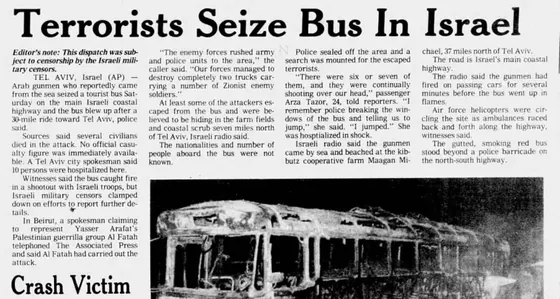
This dispatch was subject to censorship by the Israeli military censors.
a paper whose masthead is cut off · 11 March 1978 · CP-1978-023
Portions of the following story were deleted by the Israeli military censor.
Great Falls Tribune · 5 July 1979 · CP-1979-036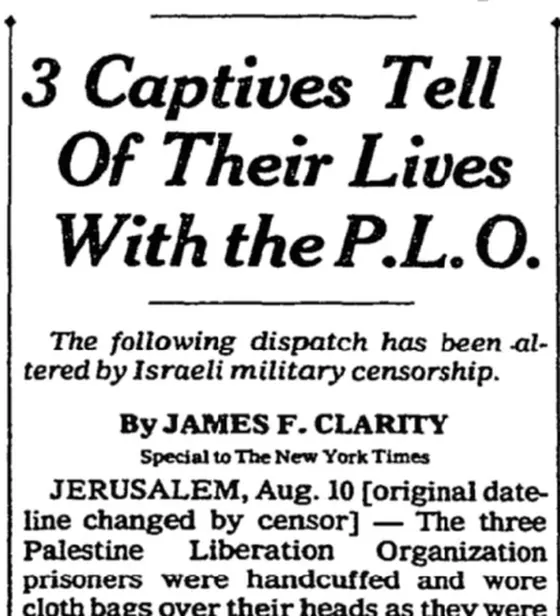
The following dispatch has been altered by Israeli military censorship.
The New York Times · 11 August 1982 · CP-1982-058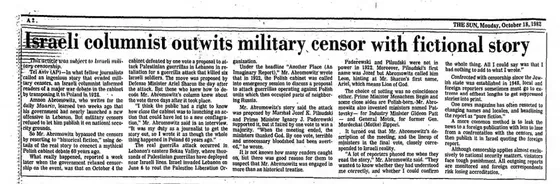
This article was subject to Israeli military censorship.
The Baltimore Sun · 18 October 1982 · CP-1982-021
The following story was submitted to the Israeli military censor, who ordered significant material deleted.
a paper whose masthead is cut off · 13 April 1984 · CP-1984-049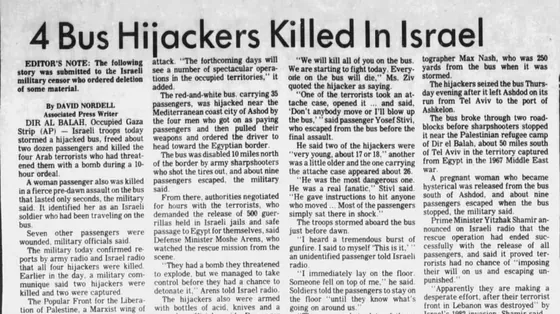
The following story was submitted to the Israeli military censor who ordered deletion of some material.
Hickory Daily Record · 13 April 1984 · CP-1984-053
This story was censored by Israeli authorities.
The Boston Globe · 15 April 1984 · CP-1984-046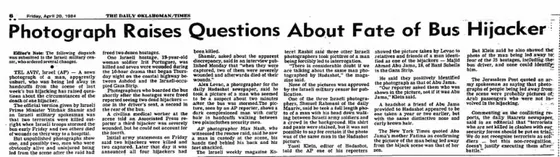
The following dispatch was submitted to the Israeli military censor, who ordered several changes.
THE DAILY OKLAHOMAN/TIMES · 20 April 1984 · CP-1984-052
The following story was submitted to the Israeli military censor.
Chippewa Herald-Telegram · 2 May 1984 · CP-1984-047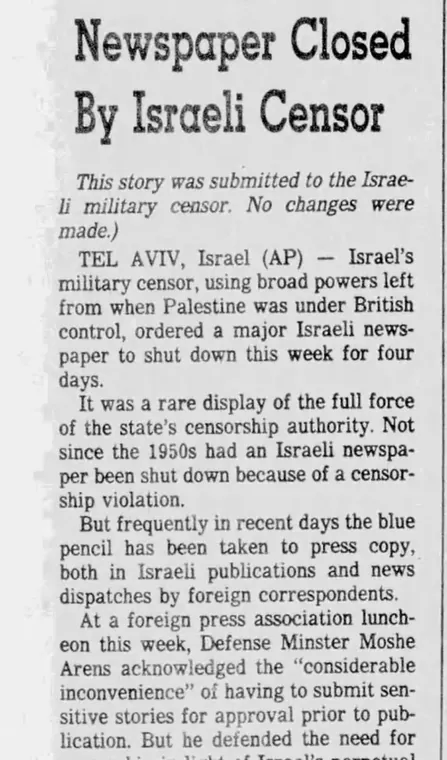
This story was submitted to the Israeli military censor.
Telegram & Gazette · 2 May 1984 · CP-1984-048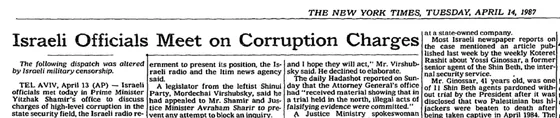
The following dispatch was altered by Israeli military censorship.
The New York Times · 14 April 1987 · CP-1987-056
This story was submitted to Israeli military censors who ordered several deletions.
Ledger-Enquirer · 6 March 1988 · CP-1988-133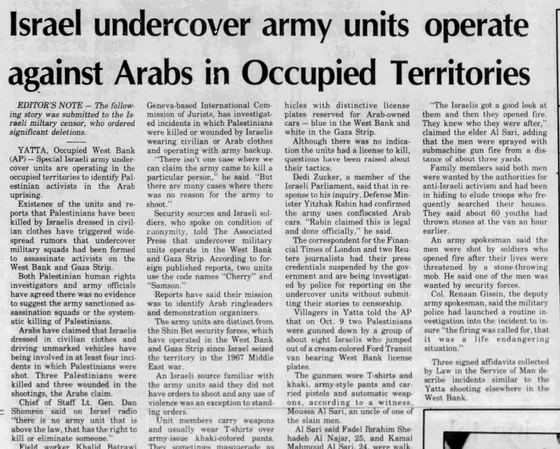
The following story was submitted to the Israeli military censor, who ordered significant deletions.
Laredo Morning Times · 29 October 1988 · CP-1988-057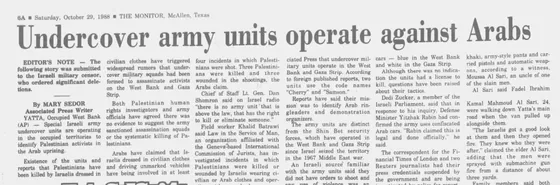
The following story was submitted to the Israeli military censor, who ordered significant deletions.
The Monitor · 29 October 1988 · CP-1988-055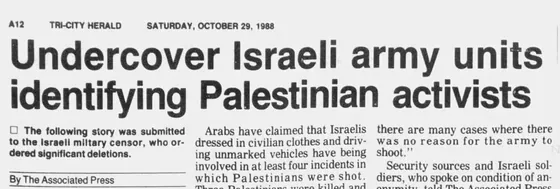
The following story was submitted to the Israeli military censor, who ordered significant deletions.
Tri-City Herald · 29 October 1988 · CP-1988-056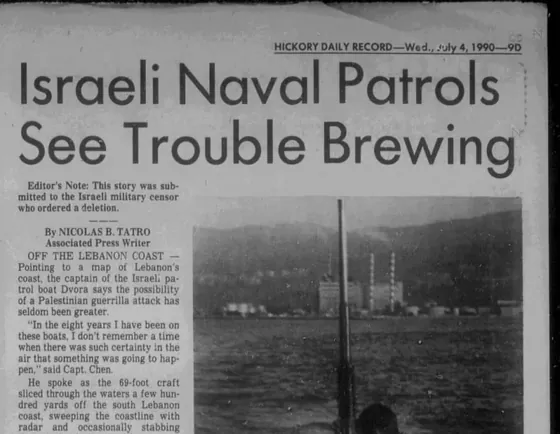
This story was submitted to the Israeli military censor who ordered a deletion.
Hickory Daily Record · 4 July 1990 · CP-1990-034
Israeli military censors delayed this report until next of kin were notified.
Huntsville Times · 11 October 1991 · CP-1991-060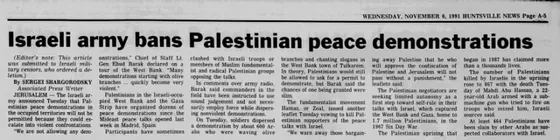
This article was submitted to Israeli military censors, who ordered a deletion.)
HUNTSVILLE NEWS · 6 November 1991 · CP-1991-058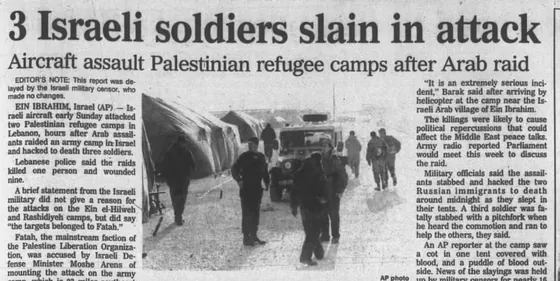
This report was delayed by the Israeli military censor, who made no changes.
Dickinson Press · 16 February 1992 · CP-1992-026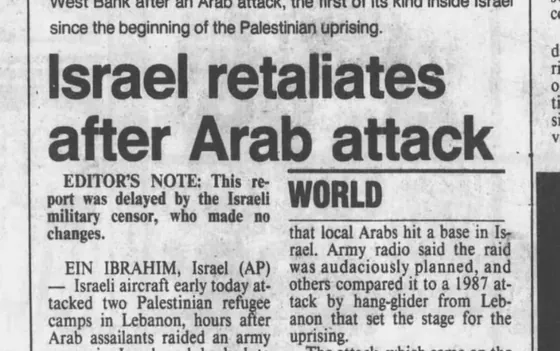
This report was delayed by the Israeli military censor, who made no changes.
Press and Sun Bulletin · 16 February 1992 · CP-1992-027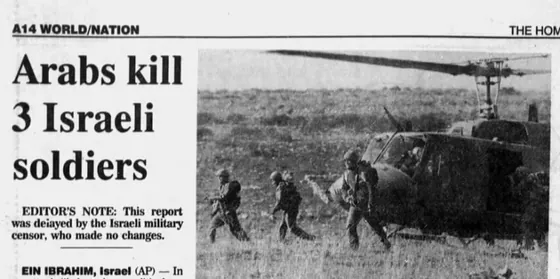
This report was deiayed by the Israeli military censor, who made no changes.
THE HOM[E NEWS] — masthead truncated · 16 February 1992 · CP-1992-024
This report was delayed by the Israeli military censor, who made no changes.
The Herald Palladium · 16 February 1992 · CP-1992-025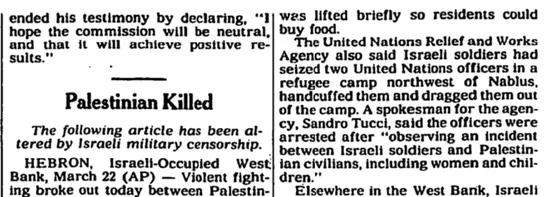
The following article has been altered by Israeli military censorship.
The New York Times · 23 March 1994 · CP-1994-067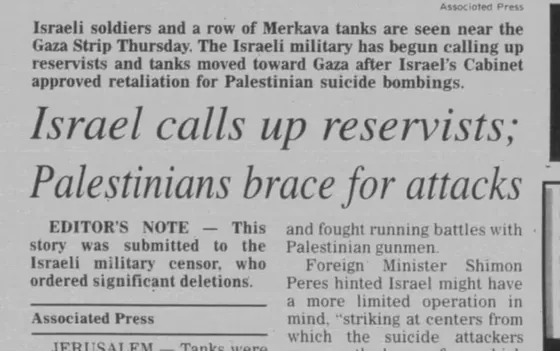
This story was submitted to the Israeli military censor, who ordered significant deletions.
Kingsport Times-News · 10 May 2002 · CP-2002-138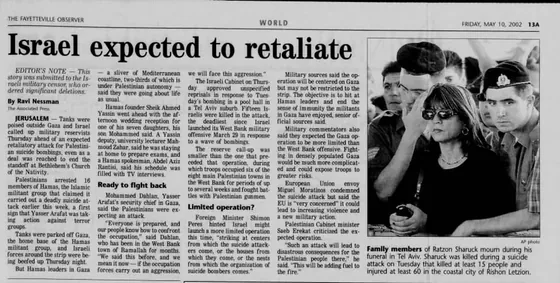
This story was submitted to the Israeli military censor, who ordered significant deletions.
The Fayetteville Observer · 10 May 2002 · CP-2002-139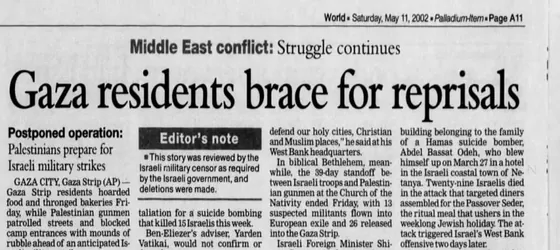
This story was reviewed by the Israeli military censor as required by the Israeli government, and deletions were made.
Palladium-Item · 11 May 2002 · CP-2002-136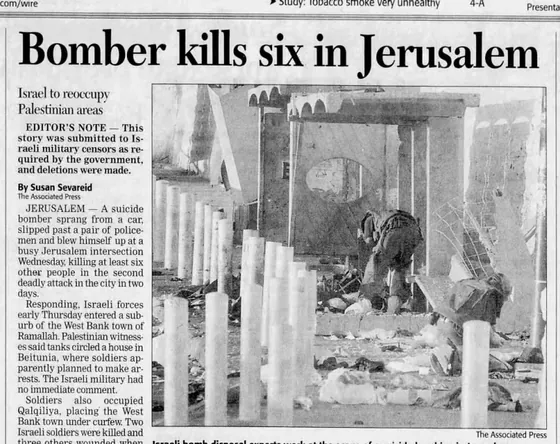
This story was submitted to Israeli military censors as required by the government, and deletions were made.
The Grand Island Independent · 20 June 2002 · CP-2002-133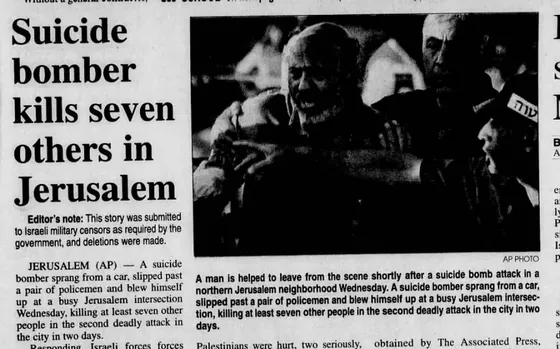
This story was submitted to Israeli military censors as required by the government, and deletions were made.
The Jamestown Sun · 20 June 2002 · CP-2002-137
Censored tells you nothing: not what, not where, not how much. Delayed… who made no changes tells you the censor read every word and let it all through. Both describe the same office. Only one lets you picture it.
The same sentence, 4 times over
On 16 February 1992, 4 of these papers ran one Associated Press story under 4 different headlines. Above all of them sat the identical sentence. One set it with a broken letter, deiayed, which is how you know each paper set the line itself.
- 3 Israeli soldiers slain in attack
Dickinson Press · 16 February 1992 · CP-1992-026 - Israel retaliates after Arab attack
Press and Sun Bulletin · 16 February 1992 · CP-1992-027 - Arabs kill 3 Israeli soldiers
THE HOM[E NEWS] — masthead truncated · 16 February 1992 · CP-1992-024 - Arabs kill Israeli soldiers
The Herald Palladium · 16 February 1992 · CP-1992-025
The disclosure travels with the story. It arrives already written. So every time a paper runs a censored story without one, a person took it off.
On 29 October 1988 the Laredo Morning Times (CP-1988-057), The Monitor (CP-1988-055) and the Tri-City Herald (CP-1988-056) all printed the note that came with the story. The Odessa American ran it eleven days later with two things taken out (CP-1988-058). The note is gone, so nobody in Odessa is told a censor saw it. And the story stops early, on questions have been raised about their tactics, with an end-of-story rule beneath it.
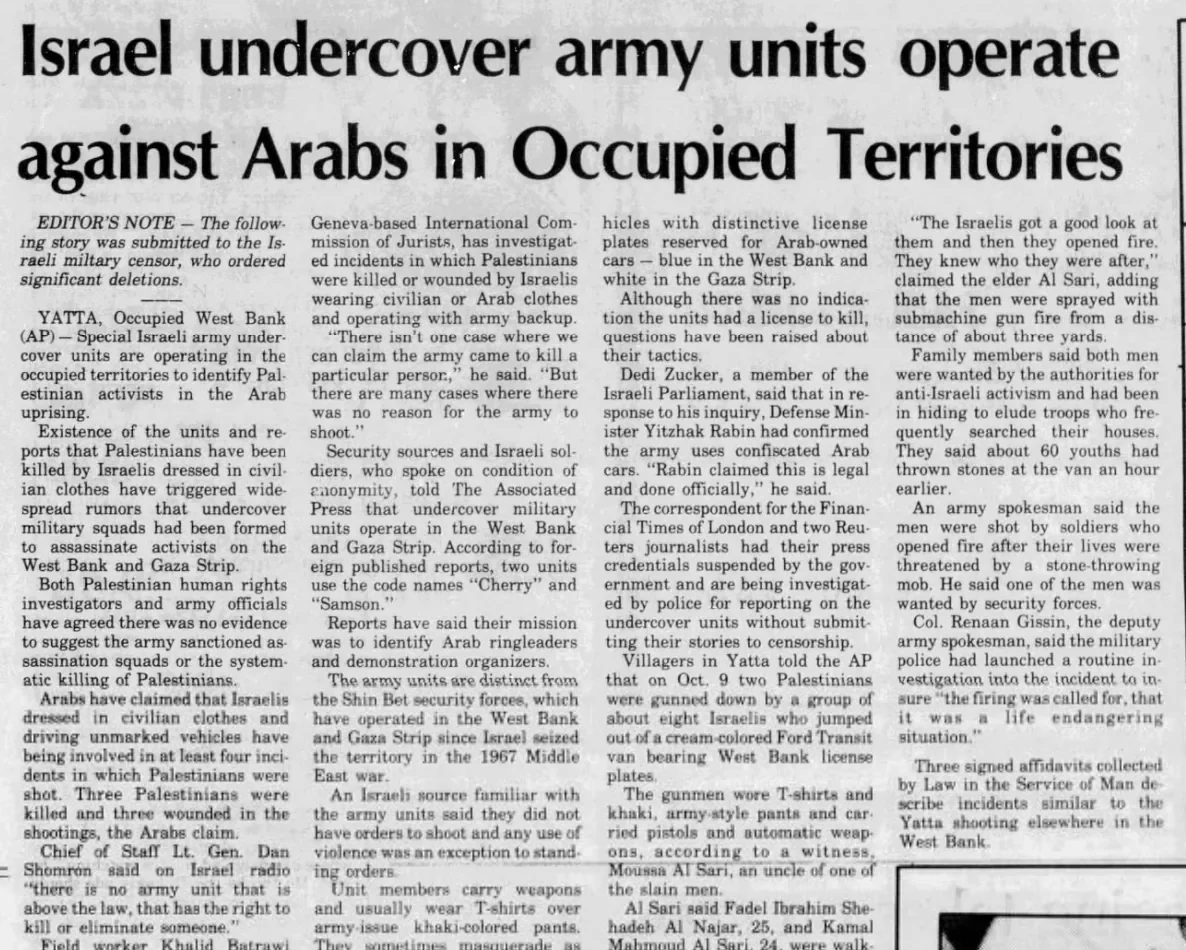
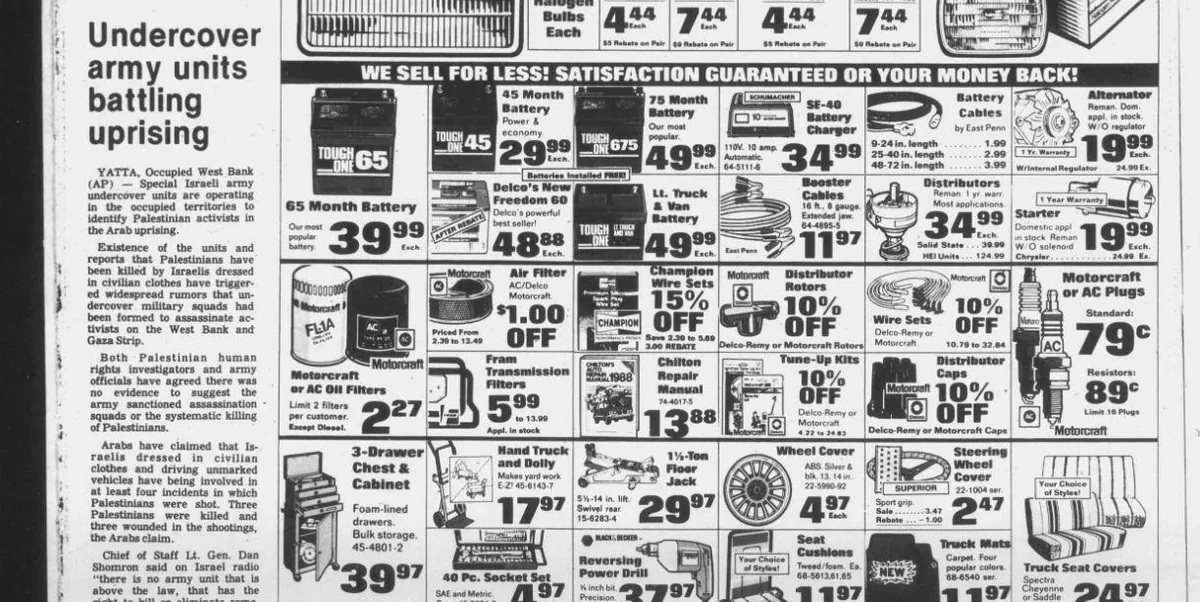
Same story, same opening words. The sentence that told Laredo a censor had seen it is simply not there in Odessa.
The scar you can see
Twice the censor’s order stayed visible, because the sentence had to be built around it. Sgt. Gil, above. And a year earlier, aboard an Israeli patrol boat off Lebanon, the Associated Press introduced a captain this way:
Chen, whose full name could not be used in keeping with military regulations, was surrounded by a bank of squawking radios linking him to other Israeli patrol craft as well as radar and other shore installations.Hickory Daily Record · 4 July 1990 · CP-1990-034
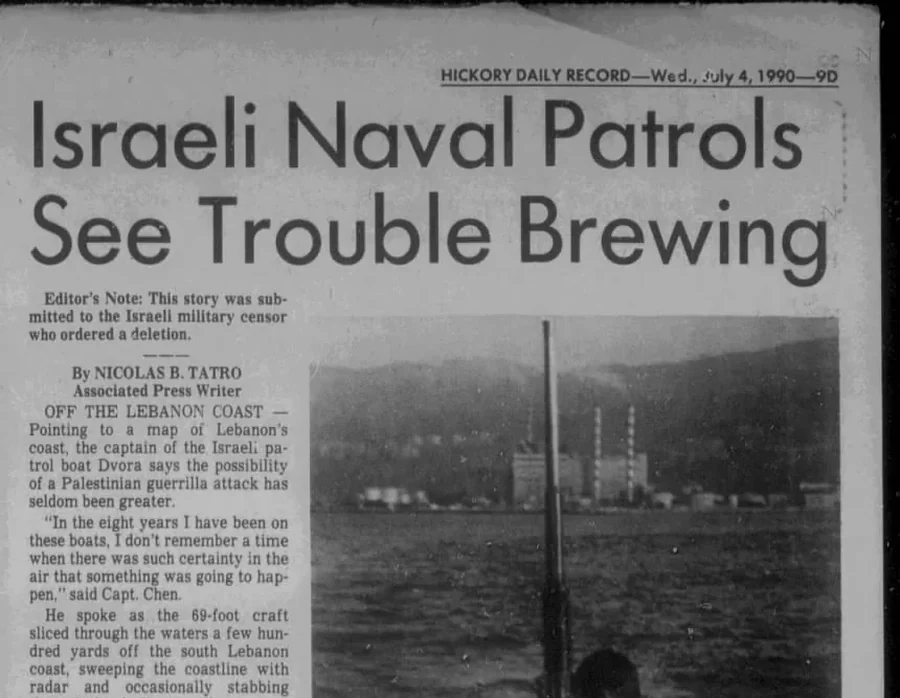
No editor’s note. The restriction sits in a subordinate clause, a fact about Chen rather than about the paper. The reader meets a man with half a name and no explanation.
Where it is exact
The notes almost never say how much. Three times, something was counted. The New York Times of 11 August 1982 printed the censor’s work inside the body text in square brackets — [18 words deleted here by censor], and at the top, [original dateline changed by censor] (CP-1982-058). A Reuters dispatch out of Gaza on 8 July 1977 told its readers it had gone to the Israeli military censors, who requested under Israeli law that 166 words be deleted (CP-1977-025). And one evening in June 1982, in the middle of The CBS Evening News With Dan Rather, the screen went black for four seconds while an announcement read 22 seconds deleted by Israeli censors (CP-1982-068).
Eighteen words. A hundred and sixty-six words. Twenty-two seconds. Those are the only measurements anybody printed. Every other note is the same event with the size removed.
The second decision
Two decisions sit in every one of these clippings, and only one happened in Israel. The first is the censor’s: what the world is allowed to learn. That one has a law behind it, an office, and a paper trail.
The second is American: whether the reader is told the first happened. That one has nothing behind it. No law required the Huntsville Times to tell its readers the surname had been taken out. Nothing stopped the Odessa American from dropping a sentence that arrived in its own copy. It happened over and over for a quarter of a century, in towns with no stake in any of it, and nobody kept a record, because the only record is the page.
The censored sentence is gone. The note above it survived.
What this page is not. These aren’t every censored dispatch in the American press, or even every one in this archive. 137 clippings here mention a censor; these 36 are the ones where the page itself carries the disclosure, in 27 identifiable newspapers. A paper missing here is a paper nobody collected, not a paper that printed nothing. Where a masthead was cut off, the record says so rather than guessing.
Last updated 2 November 2026
In most of the places news comes from, a government controls what leaves. Next time you read a
dispatch from one of them, look above the dateline before you look at the story. Somebody
decided whether to put anything there.
Back to the archive ·
Whose word ·
Who told America about Palestine
Collected and checked by Maria Robles ·
maria@rozumstudio.com