 No partner for peace, and the answer printed beside itIn a headline three years before it entered common use · 2000 to 2009
The negotiation
No partner for peace, and the answer printed beside it
The phrase reaches an American headline in October 2000, already inside quotation marks. Google’s database of scanned books does not show it in general use until 2003.
Nearly every paper that prints this argument also prints someone answering it, by name, on the same page. It is the only explanation in the archive that American newspapers rarely ran on its own.
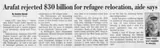
“Arafat rejected $30 billion for refugee relocation, aide says.”
Indianapolis Star. Attributed to an aide, and carrying the older frame inside it: the money is for relocation.
 CP-2000-001
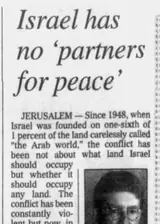
“Israel has no ‘partners for peace’.”
The State Journal-Register, Springfield, Illinois, over a syndicated George Will column datelined Jerusalem. The earliest use here, in a headline, in quotation marks, three years before the phrase becomes common in print — and it arrives as argument rather than as reporting.
 CP-2000-007
“It was the Arabs who rejected this plan and every other plan since.”
The Journal News, White Plains, in the letters column. The letter directly beside it is headed Zionist propaganda dehumanizes Arabs. Two readers, opposite positions, same page, same day.
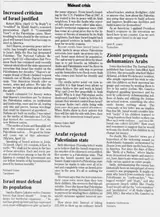 CP-2002-005
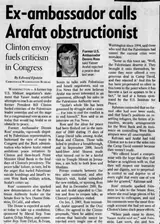
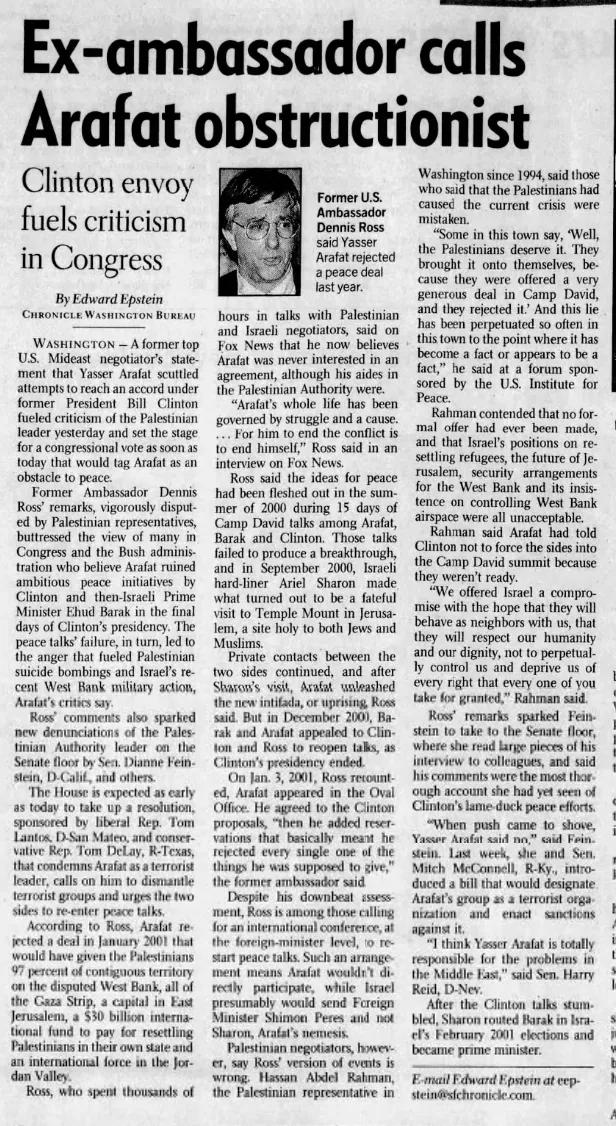
“They were offered a very generous deal in Camp David, and they rejected it. And this lie…”
San Francisco Chronicle, Edward Epstein. The same news story quotes Dennis Ross, Clinton’s envoy, saying Arafat rejected the deal, and quotes the reply to it. The frame and its contradiction, attributed, in one piece of reporting.
CP-2002-010“Arafat is ‘partner for peace’ all right — as in ‘rest in peace, Israel’.”
The Free Lance-Star, Fredericksburg. Eighteen months on the phrase is established enough to be a pun, and the column attacks the New York Times on its way past for burying a report on A10.
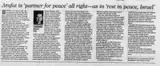 CP-2002-012
“Arafat rejected the best offer Palestinians are ever likely to get.”
Morton Kondracke, syndicated into the Southwest Daily News of Sulphur, Louisiana. Set as a pull quote, which is how a contested claim becomes the thing a reader takes away from the page.
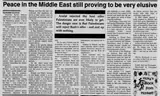 CP-2002-013
“Netanyahu: Israel ‘partner for peace’ with Palestinians.”
Huntsville Times, Alabama. The phrase turned around and claimed, by the man the 1996 clipping in the section above is about.
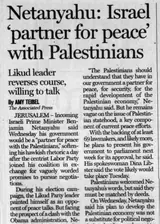 CP-2009-023
Two things are visible here that are not visible in the other explanations. The phrase arrives in American headlines about three years before it becomes common in books, which means newspapers had it first. And where the other frames travel unanswered, this one is printed alongside the people disputing it — a former ambassador and the word lie, in the same column of the same newspaper.